South Africa was never going to be an easy destination. Before I arrived, I carried the same fragments many travellers do: safari, apartheid, wildlife, danger, Cape Town. What I found was far more layered—a country capable of holding extraordinary beauty beside difficult history, and one that quietly changed my understanding of wellness.
I travelled as a vegan, as a transgender woman and as a Google Local Guide accustomed to paying attention to details. In South Africa, those details mattered more than usual. A staff member using my name without hesitation. A lodge chef preparing a complete plant-based meal rather than a collection of side dishes. A market where the food felt connected to the soil. A museum that made it impossible to remain emotionally distant.
The journey moved from Johannesburg to the Pilanesberg bush, then south to Cape Town. Each place asked something different of me. Johannesburg required attention. Safari demanded stillness. Cape Town invited movement, pleasure and a more generous relationship with daily life.
Johannesburg: Arrival, Awareness and First Impressions
I landed at O. R. Tambo International Airport on a dry winter morning. The light felt sharper than anything I knew from Europe, and the air carried dust, grass and diesel. Johannesburg unfolded in contrasts: wide highways, industrial landscapes, guarded neighbourhoods and sudden streets softened by jacaranda trees.
As a solo transgender traveller, I had planned carefully. I used a pre-arranged airport transfer, stayed in a well-reviewed area and moved with awareness rather than fear. That distinction mattered. Travel becomes exhausting when every decision is shaped by anxiety, but it becomes safer when preparation is treated as part of the journey rather than a sign that something has already gone wrong.
Johannesburg did not offer immediate ease. It offered scale, contradiction and the feeling of a city still negotiating with its own history. That tension became part of the experience rather than something I could edit out.
In unfamiliar cities, good planning creates room for curiosity. Pre-arranged transport, recent local advice and accommodation in a well-connected area helped me move with confidence.
The Safari Reset at Shepherd’s Tree
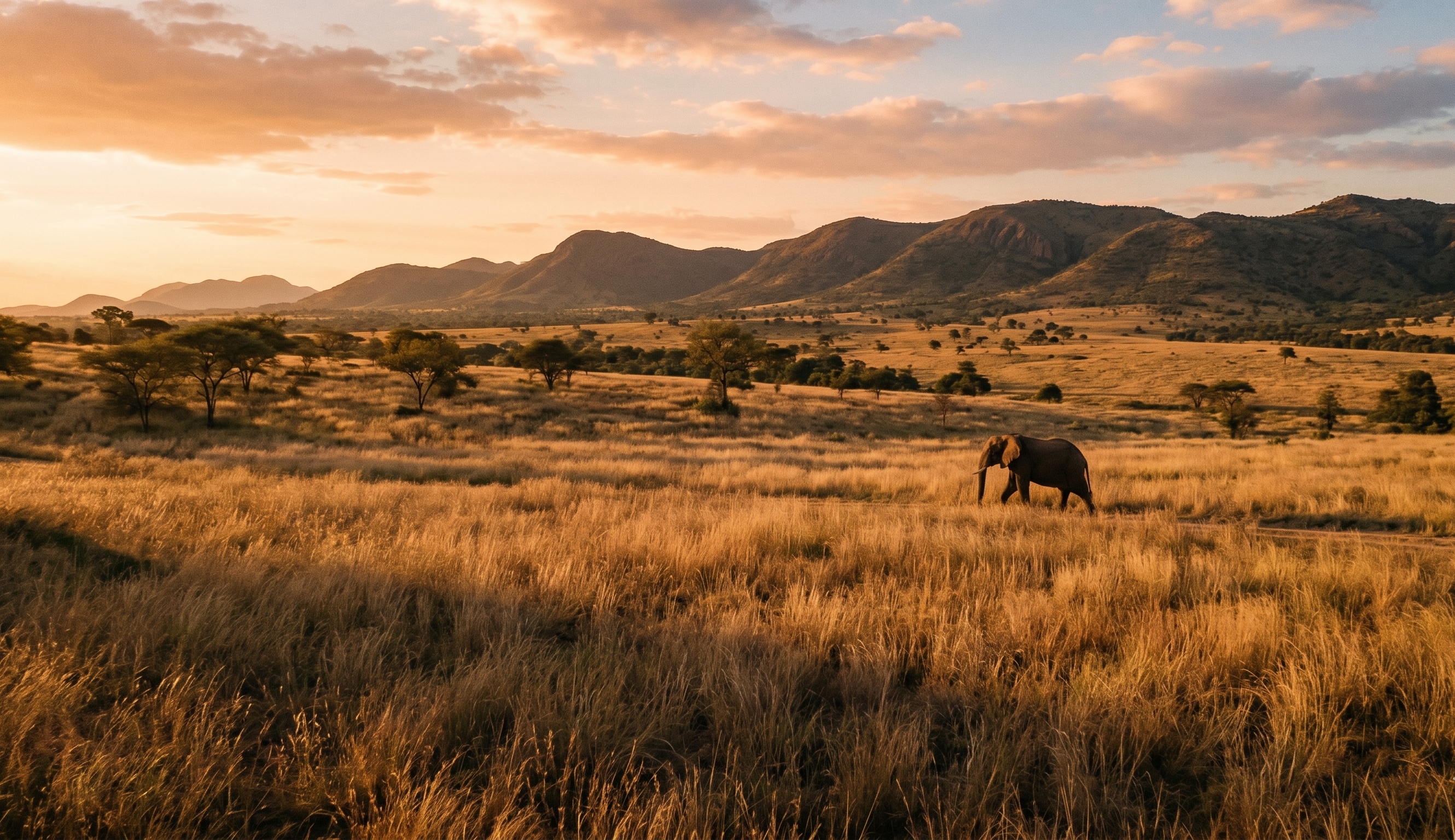
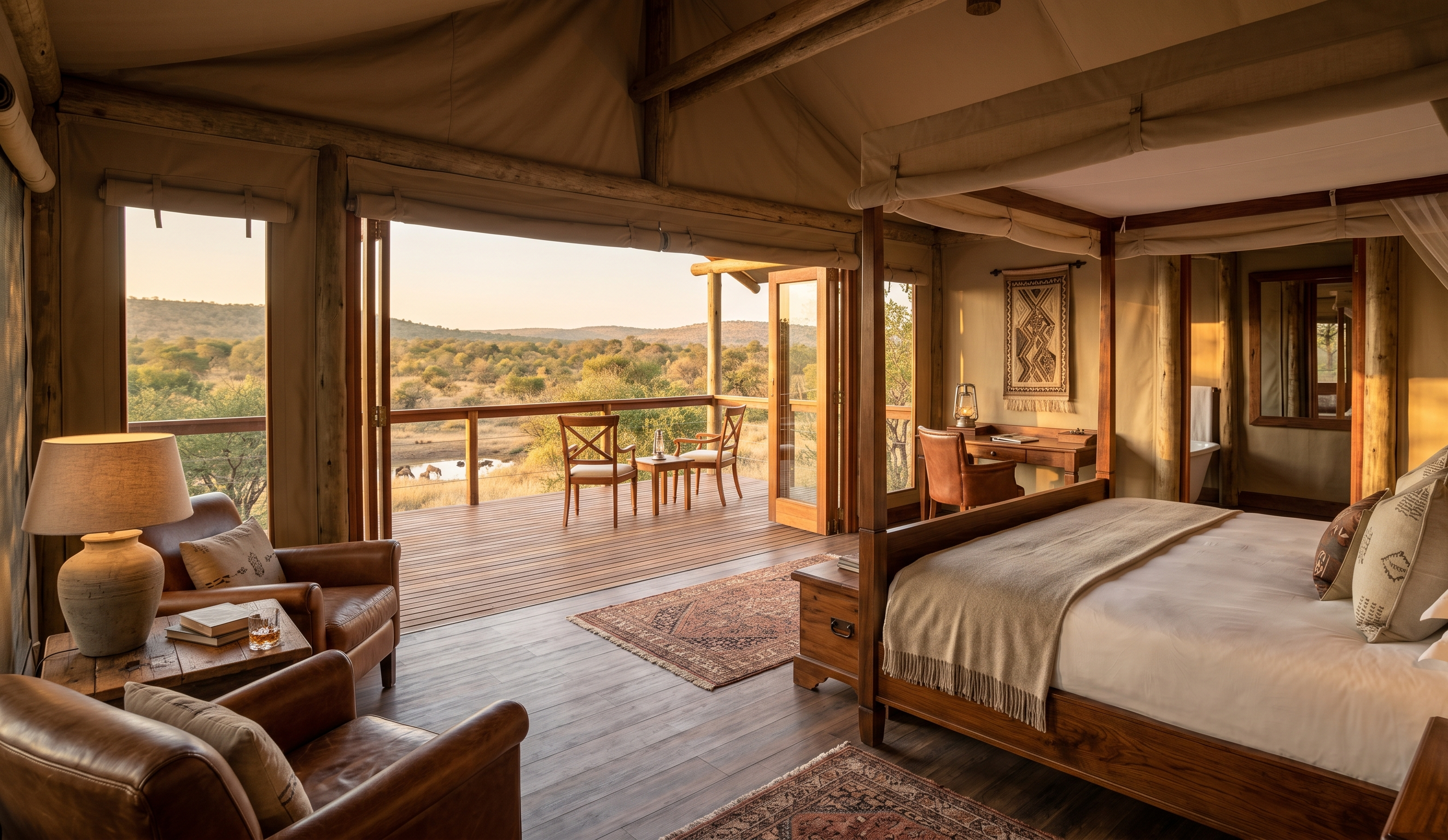
A few hours beyond Johannesburg, the landscape opened into the Pilanesberg region. At Shepherd’s Tree Game Lodge, the pace changed immediately. The suite looked over the savanna, and the quiet was so complete that I became aware of sounds usually hidden by city life: insects, wind moving through dry grass and, once, the distant call of lions after dark.
Safari travel can be physically demanding. Days begin before sunrise, game drives are long and dust finds its way into everything. Yet the lodge created recovery around that rhythm. The spaces were calm, the service attentive without becoming intrusive and the hours between drives felt protected.
One morning, before anyone else was awake, I sat alone on the deck. Light reached the tops of the acacia trees while wildebeest moved across the middle distance. For the first time in months, my chest did not feel tight. There was nothing to answer and nowhere else to be.
The food was handled with the same sense of care. I had communicated my dietary needs in advance, and the kitchen prepared chickpea curries, grilled vegetables, fruit, plant milks and sorbets without making the request feel difficult. Staff used my correct name naturally. These details created a form of belonging that no branded amenity could replace.
Living by the Rhythm of the Bush
Safari days followed a pattern older than any itinerary: dawn, rest and dusk. We left in the dark with coffee and blankets, watching the landscape become visible around us. Impala stopped mid-step. A giraffe rose above the tree line. Elephants dusted themselves near a dry riverbed while the vehicle remained still enough for us to hear the low vibrations of their bodies.
Later, lions rested near a waterhole, indifferent to our presence. Zebras crossed the road without urgency. Rhinos stood at a distance like pieces of the landscape itself. The guide never forced proximity or encouraged behaviour for a photograph, and that restraint mattered to me.
As a vegan, I have always understood animals through the refusal to treat them as objects. Seeing them on their own terms deepened that belief. There were no cages, no performances and no guarantee of a sighting. The animals remained fully themselves, and the privilege was ours simply to witness.
By the third day, my body had adjusted to the bush. I was asleep early and waking before the alarm. Midday hours were for fruit, tea, reading, journaling and gentle movement on the deck. The rhythm slowed my thoughts in a way no city spa had managed.
I look for reserves and guides that prioritise conservation, maintain respectful distance and never bait or harass wildlife for photographs. Where we spend money shapes the kind of tourism that survives.
History That Cannot Be Treated as Background
Returning to Johannesburg after safari, I visited the Apartheid Museum. The experience was not something I could absorb quickly. The exhibits moved through segregation, forced removal, resistance, imprisonment and the long struggle toward democracy, but the emotional weight came from individual lives: photographs, letters and voices that refused to disappear.
I sat in one room for a long time. I do not compare my experience as a transgender woman with what Black South Africans endured under apartheid; the histories and scale are entirely different. Yet the museum’s questions about dignity, public space and who is permitted to exist safely resonated deeply.
Conscious travel requires more than admiring a landscape. It asks us to understand what shaped the place, to recognise inequality that remains visible and to spend with awareness. South Africa’s beauty becomes more meaningful—not less—when its history is not pushed out of the frame.
Afterward, I needed routine. Fresh Earth Food Store became an anchor for plant milks, fruit, nuts, tea and simple supplies. At The Grillhouse in Melrose Arch, even a traditional steakhouse offered a considered vegan plate. That small experience reflected a broader shift: plant-based dining was no longer treated as an inconvenience, even in spaces built around very different food traditions.
Cape Town: Ocean, Mountain and a Different Energy
The flight south changed the atmosphere completely. Cape Town arrived with cooler air, ocean moisture and Table Mountain rising above the city with almost theatrical scale. Johannesburg had asked for alertness; Cape Town offered more immediate ease.
My days often began along the Sea Point Promenade, where cold Atlantic water moved against the rocks and morning light opened gradually across the coast. Later, I would walk through the City Bowl, spend time in Gardens or end the day at Signal Hill as the sky moved from copper to violet.
As a transgender woman, I felt most comfortable in Sea Point, the City Bowl and Camps Bay, where diversity was visible and everyday interactions were generally relaxed. I still used the same safety practices I would in any unfamiliar city—registered transport after dark, recent local advice and awareness around valuables—but I was able to enjoy the city without allowing fear to define it.

The Places That Made Cape Town Feel Nourishing
Cape Town’s plant-based culture was not hidden inside a single neighbourhood. It appeared through markets, restaurants, zero-waste stores and cafés that treated food as part of a wider relationship with the land.
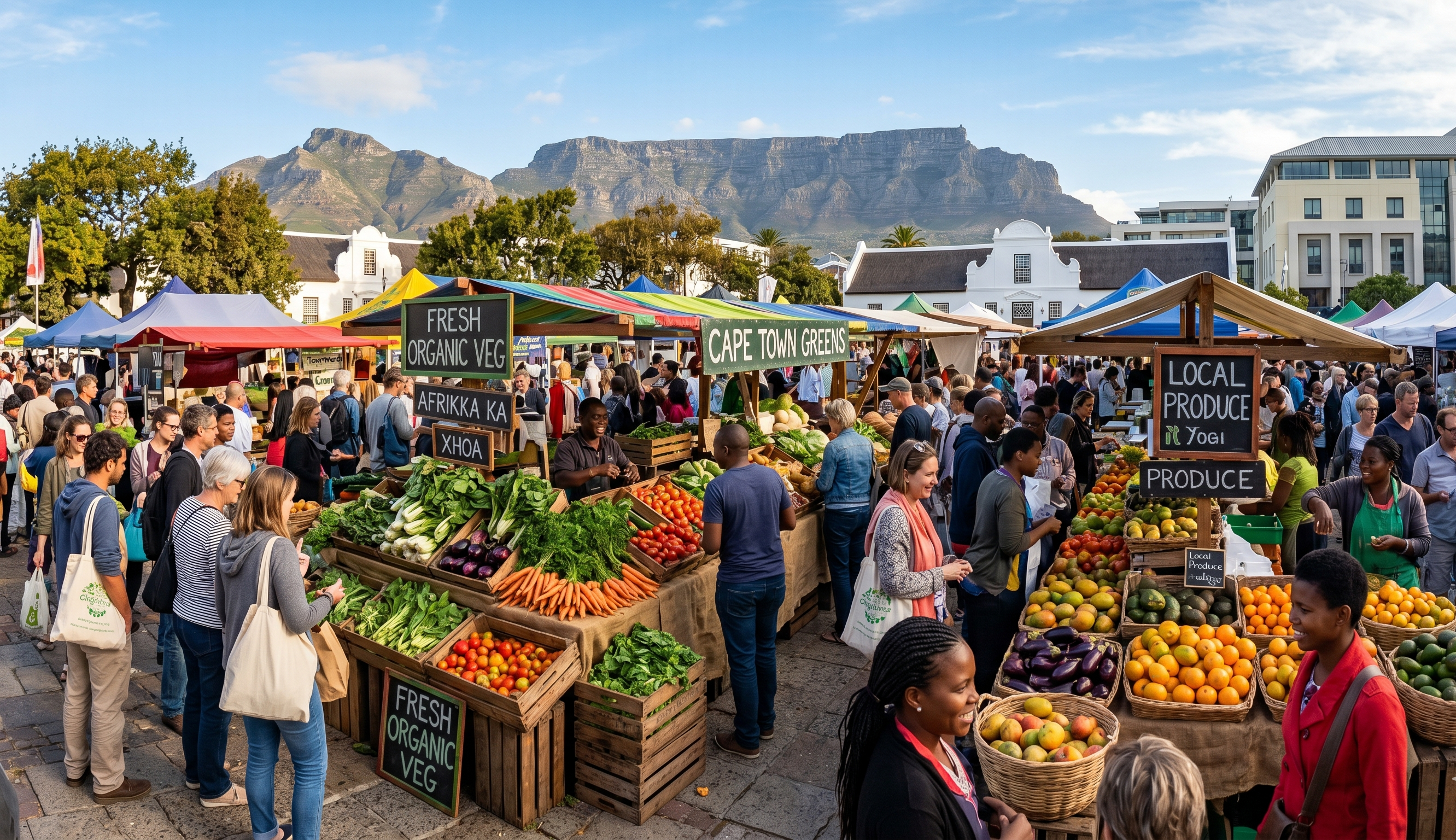
Oranjezicht City Farm Market
The market became a weekend ritual. Beneath white canopies, tables were filled with heirloom tomatoes, greens, sourdough, fermented foods and fresh produce. Music moved through the space while families, chefs and visitors ate together at long tables.
One morning, I ordered lentil dhal with coconut cream and grilled flatbread, then sat in the sun with Table Mountain visible beyond the market. It was not an extravagant meal, but it contained everything I value: good ingredients, local energy and the feeling that food had travelled a short, understandable distance to reach me.
NUDE FOODS
For longer stays, NUDE FOODS made everyday routines easier. Bulk grains, nuts, dried fruit, tea and eco-friendly body products were available without unnecessary packaging. Shopping there felt calm and purposeful rather than performative.
I stocked up on oats, almonds, dried mango, dark chocolate and rooibos tea—simple items that allowed mornings and hiking days to remain flexible without depending on restaurant schedules.
The Conscious Kitchen
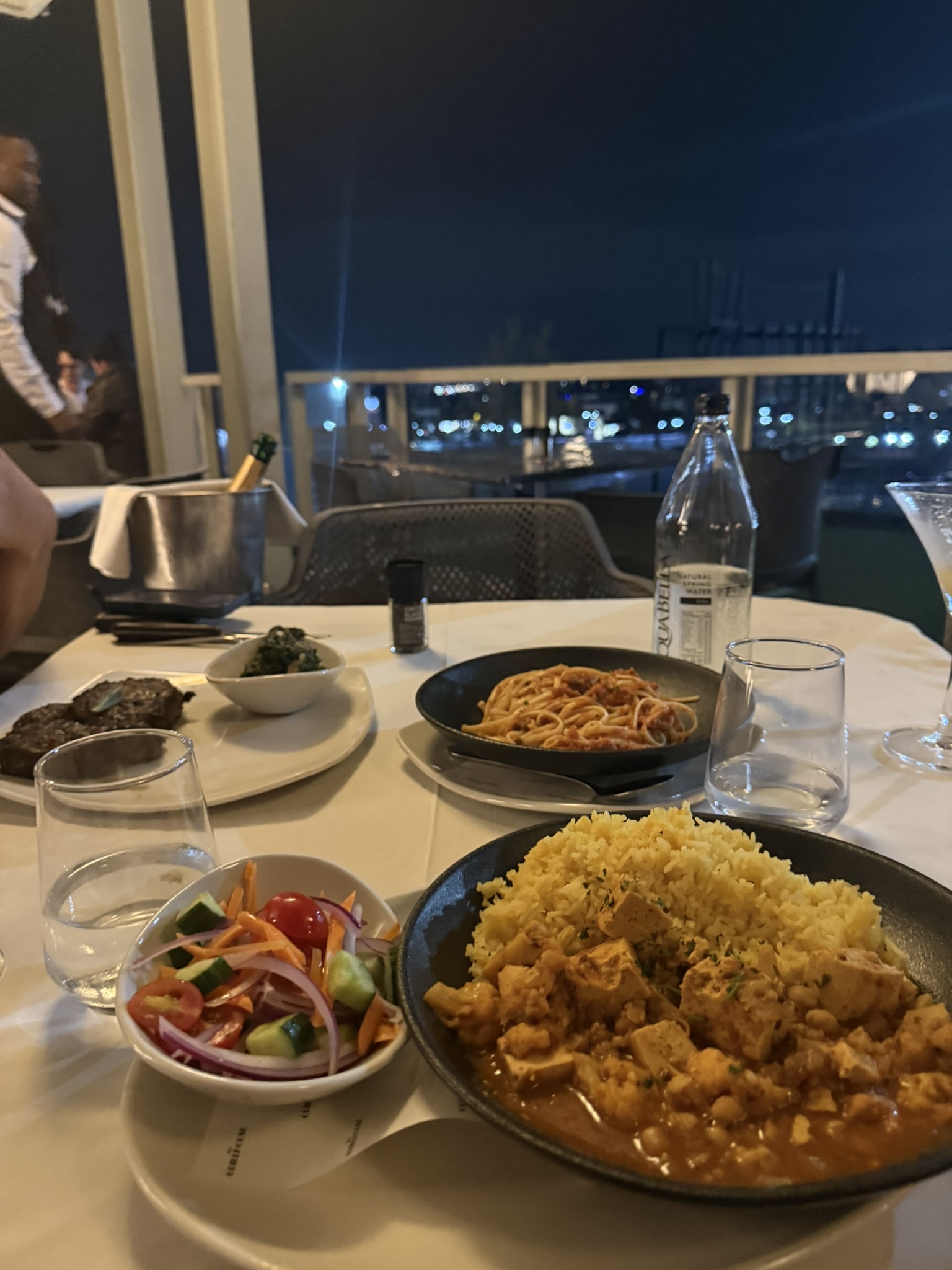
This was the restaurant I would most strongly recommend to a plant-based visitor. The atmosphere was modern and relaxed, while the food focused on vegetables, grains, legumes and nuts rather than imitation. A nourishing bowl, jackfruit tacos and cashew-based dessert felt generous without becoming heavy.
The deeper pleasure came from not needing to explain. The menu, the service and the values of the restaurant were already aligned with the way I live.
Plant in Camps Bay
Plant changed the usual story of beachfront dining. Instead of seafood, I ate rich cashew-based pasta, a substantial vegetable burger and a deeply flavoured mushroom dish while the Atlantic turned gold outside.
What stayed with me was how ordinary it felt. Couples, families and solo travellers were simply eating plant-based food beside the ocean, without treating the restaurant as a statement or novelty.
Movement as a Way of Staying Grounded
Yoga Life became my anchor in Cape Town. The studio was intimate, filled with natural light and free from the polished anonymity of larger branded spaces. Morning vinyasa classes gave structure to the day, while slower yin sessions helped release the physical tension of travel.
Entering a new wellness space as a transgender woman always carries a brief calculation: will the language be inclusive, will I be watched and will I be allowed simply to participate? At Yoga Life, nothing became an issue. I arrived, moved, breathed and left feeling better. That simplicity was its own form of welcome.
Outside the studio, the city provided movement everywhere. Cold swims, promenade walks, mountain trails and open-air afternoons meant wellness did not need to be purchased as a separate experience. Nature remained the strongest practitioner.
At Signal Hill, I watched Cape Town spread between mountain and sea. From above, beauty and inequality were visible at once. The moment resisted easy interpretation, but it clarified something important: conscious travel is not only about how a destination makes us feel. It is also about whether we are willing to see the full place rather than the version designed for visitors.
Travelling as a Transgender Woman
South Africa offered both reassurance and complexity. Cape Town’s more cosmopolitan neighbourhoods felt welcoming, while some parts of Johannesburg required greater caution. My experience was mostly respectful, but it would be dishonest to present safety as universal or guaranteed.
I stayed in well-reviewed areas, used registered transport, avoided walking alone in unfamiliar places after dark and listened closely to local advice. Those choices did not remove spontaneity; they protected it.
One of the most meaningful interactions happened at Shepherd’s Tree, where a staff member asked my preferred name and used it consistently throughout the stay. There was no awkwardness or need for correction. A small act of respect changed the emotional tone of the entire visit.
Read recent accounts from local queer communities, choose accommodation in well-connected areas and layer practical safety measures rather than relying on legal protections alone. Experiences vary by neighbourhood, setting and individual circumstance.
A Journey Designed Around Contrast
South Africa worked because the route moved between intensity and recovery. Johannesburg introduced complexity. Safari created stillness. Cape Town returned me to movement, food and the ocean.
For safari lodges, communicating dietary needs in advance is essential. In Cape Town, plant-based options are plentiful, while supplies become less predictable outside major cities. Nuts, dried fruit and simple snacks are useful on long drives and remote days.
Season changes the character of the journey. Winter brings cold safari mornings and often stronger wildlife viewing, while Cape Town becomes cooler and wetter. Warmer months support beach life and longer outdoor evenings but also attract more visitors.
What South Africa Changed
I arrived expecting wildlife and dramatic scenery. I left carrying something quieter.
South Africa changed my definition of luxury. It was no longer marble, branding or predictability. It became alignment: food that nourished me, spaces where my identity did not require explanation and hospitality that remained connected to the land rather than separated from it.
Luxury was the sound of lions after dark. A market breakfast in the sun. Cold Atlantic water before yoga. A staff member who remembered my name. Twenty minutes watching light move across the savanna without reaching for my phone.
The country also reminded me that beauty should not erase history. The most meaningful journeys are often the ones that ask us to hold discomfort and gratitude at the same time—to be changed by what is beautiful while remaining honest about what is unresolved.
I went to South Africa expecting a holiday. I returned with a clearer understanding of what it means to feel present, nourished and free. That is the kind of experience I hope every journey leaves behind.


